| PRE-INTERCEPTOR CONFIGURATION |
The pre-conversion car was a genuine
Ford XB Falcon GT Coupe which was delivered to Rural Motors
in Orange, New South Wales (NSW) at the end of 1973 and registered with NSW
plates as: IFE509. It had
the GT required V8 engine, dashboard and steering wheel plus all the
standard GT RPO fittings such
as the limited slip diff, super duty shock absorbers, sports handling suspension and
4-wheel disc brakes.
It also
had the GT Tutone Black Hood which stood out well against the polar
white body colour. This
coupe
was one of 75 GT two-doors built during the month of November, 1973 and
one of only six of those
delivered in the polar white paint livery. Air conditioning was fitted,
not at factory, but after delivery by
either the dealer or one of the early owners. The a/c unit is an
after-market attachment that goes under the
dashboard and the heater fascia in the car shows it was not factory
fitted with a/c. When the film started
pre-production in 1977, the car
was
acquired second-hand from the Dandenong area of Melbourne
by custom car
company Graf-X International. |
| |
|
|
|
|
|
|
JG66ND 43660 K |
|
| |
Type: |
1973 Ford XB Falcon GT Hardtop |
|
| |
Model No.: |
18318 |
|
| |
Body Type: |
65H |
|
| |
VIN Number: |
JG66ND 43660 K |
|
| |
Country Built: |
J |
Australia |
|
| |
Plant: |
G |
Broadmeadows, Melbourne |
|
| |
Model Code: |
66 |
Falcon GT Hardtop |
|
| |
Year Built: |
N |
1973 |
|
| |
Month Built: |
D |
November |
|
| |
Engine: |
T |
HP 300hp 351ci (5.8L) V8 / 4V carb / HC |
|
| |
Transmission: |
L |
Manual 4-spd Floor
Shift |
|
| |
Trim: |
B |
Black Vinyl |
|
| |
Paint: |
3 |
Polar White |
|
| |
Optioned RPOs:
|
03
11
55
71 |
Seatbelts (Mandatory)
Laminated Windscreen Tinted Band
Colour Keyed Tutone Hood
Super Fringe Deluxe P.B. Radio (11-Transister) |
|
| |
SIDO No.: |
680757 |
Rural Motors, Orange, NSW |
|
| |
|
|
|
|
| |
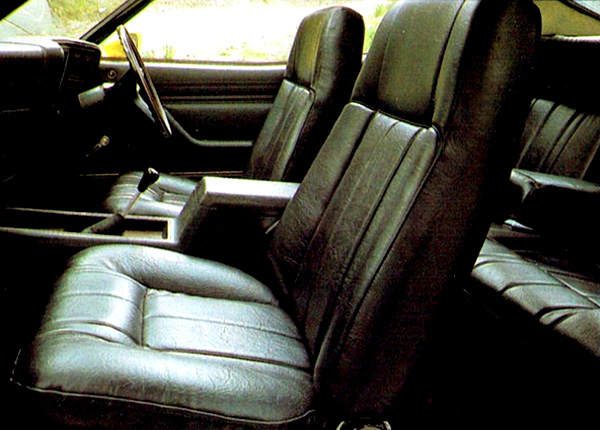
The black trimmed interior of
an XB Falcon GT coupe with 4-spd manual gearbox
formed the basic interior for the movie's futuristic police pursuit
vehicle.
(NOTE: Image is an illustrative example from a Ford brochure and not
the actual car). |
|
| |
|
|
| |
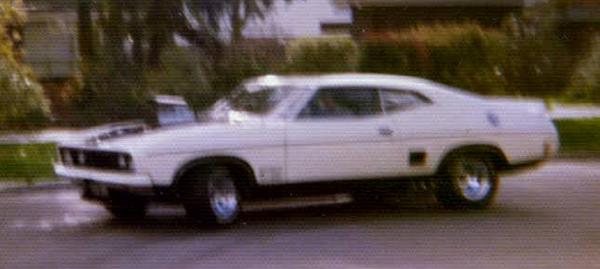
A blurry but actual photo of the original
GT coupe during conversion to the Mad Max Interceptor
in mid-1977. It appears the fake Weiand supercharger and zoomies was the first part of the job.
Photo: via Chris Munday. |
|
| aaaaaaaaaa |
aaaaaaaaaaaaaaaa |
aaaaaaaaaaaaaa |
aaaaaaaaaaaaaaaaaaaaaaaaaaaaaaaaaaaaaaaaaaaaaaaaaaaaaaa |
aaaaaaaaaa |
| INTERCEPTOR MODIFICATIONS |
During 1977, Mad Max production
art director John Dowding hired Melbourne custom car company
Graf-X International as the prime contractor for the
fictional police car modifications. General Manager Ray
Beckerley, the film's principal vehicle designer, began working on the
Black-on-Black Interceptor as soon
as he acquired the XB GT hardtop base car. Mechanic Murray Smith also
worked on the Falcon conversion
and kept it roadworthy during production. The following modifications were
undertaken: |
| |
| EXTERIOR MODIFICATIONS |
| |
|
|
|
| |
Arcadipane Concorde Nose |
|
|
| |
The distinctive, prominent Interceptor
nose cone was subcontracted to Peter Arcadipane and
his
specialist Melbourne design company Arcadipane Products who built customised fibreglass
add-on
parts for
1970s
cars.
The nose modification was not designed specifically for the
movie, instead it was selected from a pre-existing design Peter created for Falcon vans and
coupes. The nose
involved
an angled
front section (hence the product name Concorde), with
a lower air-dam
and
new
rectangular
headlights.
The particular air-dam used for the
Interceptor featured left-right
turning indicator lamps. The
headlights are a squared design
that simply use the XC
Fairmont
units. The Concorde nose
comes with a variety of gold
striped headlight covers to
complete the customised look, the ones used in the film had
thick gold
borders. |
|
| |
|
|
|
| |
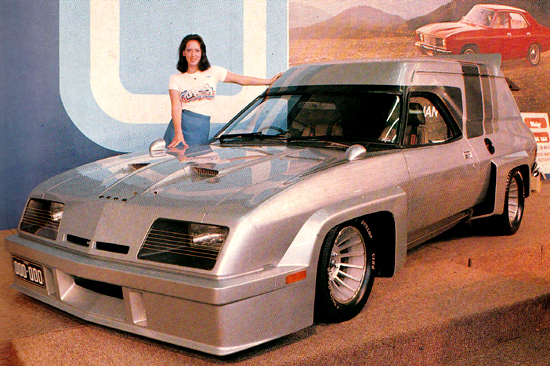
The now famous custom built Arcadipane
Concorde nose as featured on an XC Falcon
panel van displayed at the 1977 Melbourne Motor Show in Australia.
Photo Source: Facebook - Concorde Show Van. |
|
| |
|
|
| |
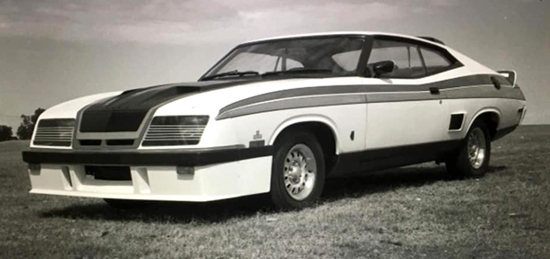
A Moffat Ford Dealer Team concept Falcon
with a Concorde nose. In contrast to the van image
above, the coupe front has a narrower mid-section lip ending flush with
the front wheel arches.
Photo Source: Facebook - Concorde Show Van. |
|
| |
|
|
| |
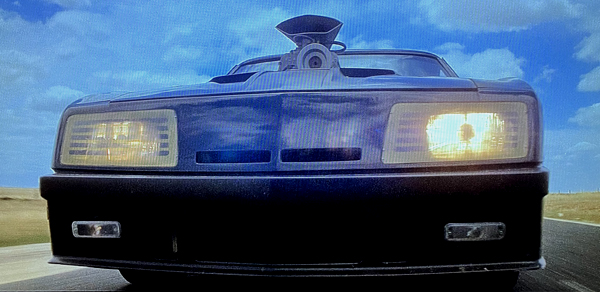
The Arcadipane Concorde nose received a number
of movie screen close ups!
Note the left and right indicator lamps fitted to the lower air-dam. |
|
| |
|
|
|
| |
Wheel Flares / Boot Spoiler /
Roof Spoiler |
|
| |
The wheel flares are fibreglass custom builds
designed to fit the wheel arches of the Falcon. The
front flares
mould into the ends of the Concorde front grille. The rear flares are quite
prominent
to match the wide tyres. The boot spoiler was one of Arcadipane Products
pre-existing designs
for Falcon coupes and was fitted by them when they did the Concorde
nose. The roof spoiler
was taken from a mould
used by prominent Australian race car driver Bob Jane on his sports
car sedans. The same mould was also used for the three yellow 4-door MFP
Falcons. |
|
| |
|
|
|
| |
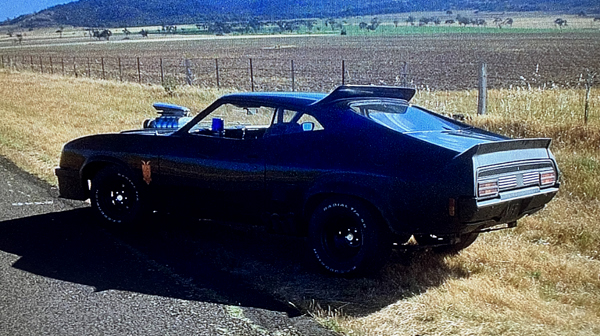
The roof and boot spoilers on the finished
Interceptor. The silver wheel studs, white labelled
tyres and MFP badges finished off the whole look of the futuristic
pursuit vehicle. |
|
| |
|
|
|
| |
Paint |
|
|
| |
Described by the film's producers as a
"Black-on-Black" pursuit car, the overall paint colour
was
a deep gloss black with a satin black trimmed rear and lower body
contouring the wheel
arches.
A satin black pin stripe line softened the contrast between the gloss
and satin finishes.
A satin
black bonnet matched the Falcon GT "Colour Keyed Tutone Hood" option.
The Ford colour
code for the gloss black colour is: B / Y426. |
|
| |
|
|
| |
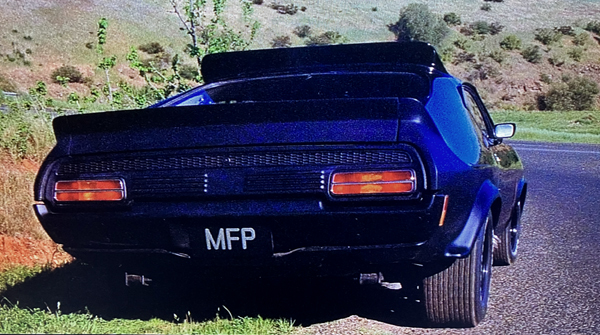
This shot from the film really shows off
the deep gloss black paint and satin black trim which
covered the rear of the car. Note the
serious 'paint-roller' 265 rubber on the rear wheels. |
|
| |
|
|
|
| |
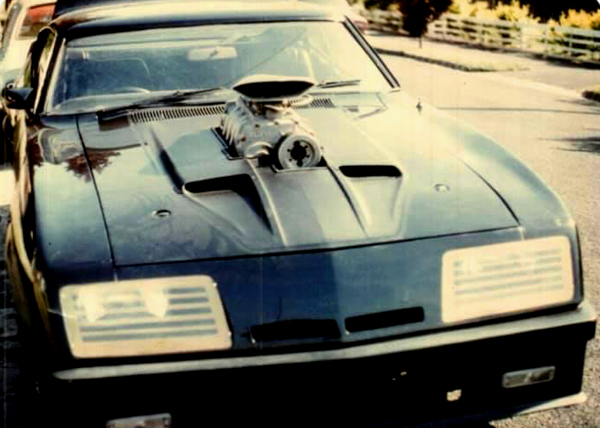
A late 1977 photo of the Interceptor
parked outside the Kennedy-Miller production office
in Kew, Melbourne. Note the satin black bonnet trim that follows the
traditional GT
Tutone styling except here it curves around and across at the
front bonnet lip.
Photo Source: Facebook - Mad Max Garage Inc. |
|
| |
|
|
|
| |
Wheels & Tyres |
|
|
| |
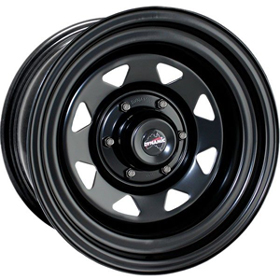
All four wheels are steel-centred,
8-spoke Sunraysia styled van wheels painted satin black.
The Sunraysia branding goes back to the 1950s and is named after the
Sunraysia region
in the north-western state of Victoria. The styling has never gone out
of fashion and they
remain a common sight today on 4x4 vehicles and many trailer units.
The tyres used
were the B.F. Goodrich T/A Radial type with the
lettering in a bold
white around the sides of the tyre. |
|
| |
Wheel Sizes:
Front: 14" x 8"
Rear: 15" x 10"
Tyre Sizes:
Front: P245/50R14
Rear: P265/50R15 |
 |
|
| |
|
|
|
| |
Weiand Supercharger
(non-functional) |
|
|
| |
The Interceptor's most famous
modification and a major part of Mad Max lore. Although real
supercharger components and parts were used, the entire setup was a
non-functional movie-
prop and was NEVER operational. The supercharger base was in reality mounted
on the top of
the V8
engine via a welded steel frame. The original Falcon GT 4-barrel carburettor
remained
underneath and inside
the blower casing but without an air-filter fitted. The supercharger
base
was a Weiand Rotor Casing with a 6-71 Scott Injector
Hat featuring the now famous air-scoop
housing mounted on top. The drive pulley wheel was made to spin via a
simple v-belt and
pulley system hidden under the bonnet that came off an extra pulley
attached to the air
conditioning compressor. |
|
| |
|
|
|
| |
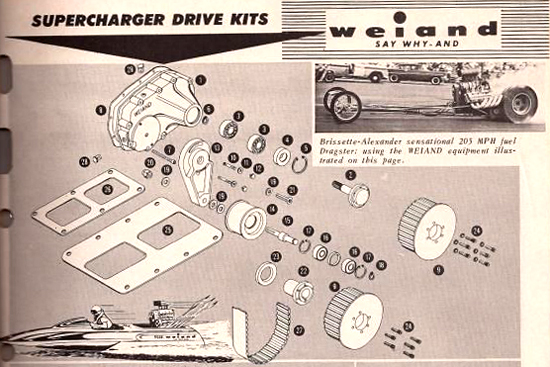
Weiand advert from the 1960s showing
dragster and speedboat supercharger applications
plus a parts schematic for the rotor case gearbox and drive pulley. |
|
| |
|
|
| |
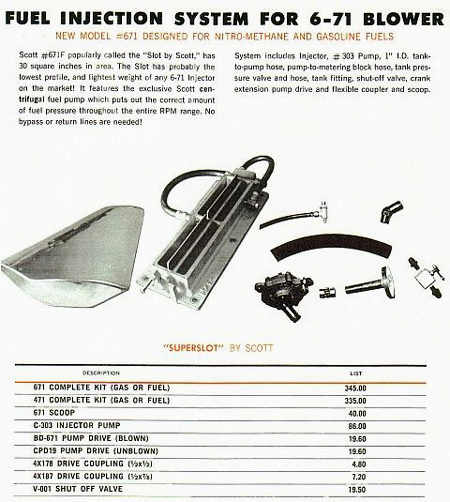
Scott Injector Hat parts list from a
period magazine advert featuring
the classic air scoop design made famous by the Mad Max
films. |
|
| |
|
|
| |
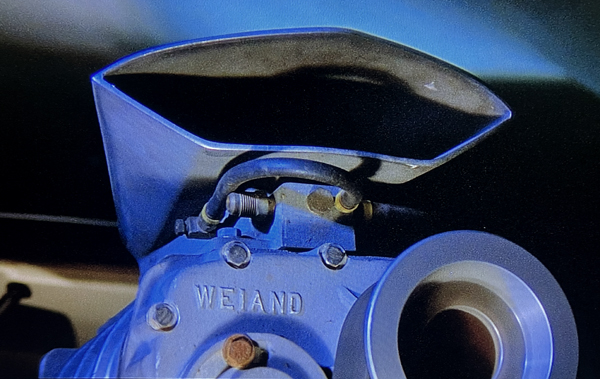
The iconic "revenge-fuelled" Weiand
Supercharger from
Mad Max (1979). |
|
| |
|
|
| |
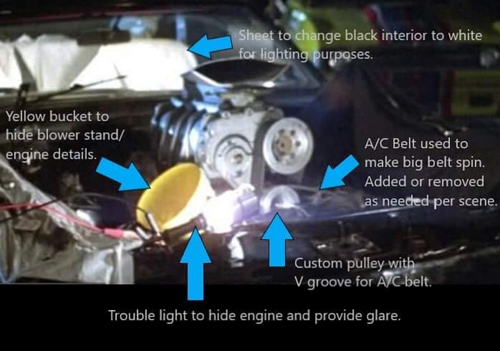
A labelled still from the movie showing
the fake supercharger's belt system linked
to the vehicle's air conditioning unit. The belt could be easily
installed and removed
depending on whether the script called for the supercharger to be
operating or not.
Photo courtesy: Douglas Mcq via Facebook. |
|
| |
|
|
|
| |
Zoomie Exhaust Pipes |
|
|
| |
These are a 4-pipe each left and right
side,
upturned exhaust system known as "zoomie pipes."
There
are chromed cuff extensions welded to the ends to extend the length
but some appear,
from
viewing the film, to be slightly misaligned in their fitting. |
|
| |
|
|
|
| |
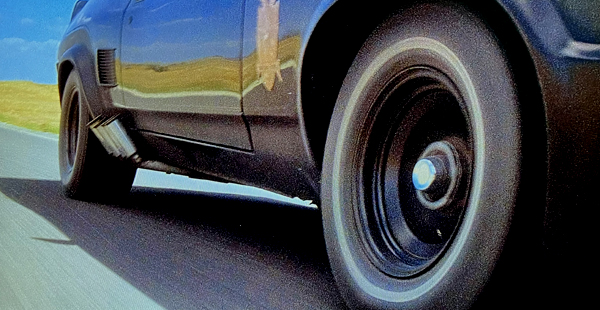
The zoomies and wheel flares are seen to
good effect in this high speed scene from the movie. |
|
| |
|
|
|
| |
MFP Badges |
|
|
| |
Two MFP 'Bronze Star' badges were
created as magnetic stick on items for the left and right
side panels behind the front wheel arches. |
|
| |
|
|
|
| INTERIOR MODIFICATIONS |
| |
|
|
|
| |
Steering Wheel |
|
|
| |
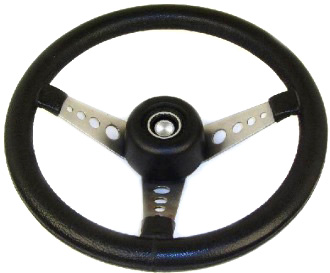
This custom addition is a MAXROB
three-spoke, soft-feel sports steering wheel.
In the movie, a small photo
was placed in the centre of the wheel of Max's wife and child. |
|
| |
|
|
|
| |
 |
|
| |
|
|
|
| |
Supercharger Switch
(non-functional) |
|
|
| |
The gear-stick mounted red blower switch
is a genuine truck differential switch and like the
supercharger unit is just a film prop with no actual functional
capability. |
|
| |
|
|
| |
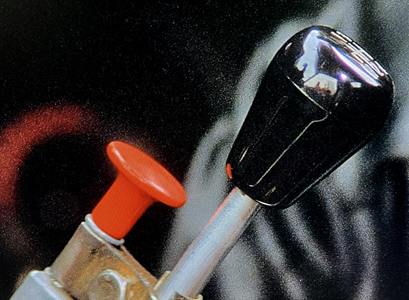
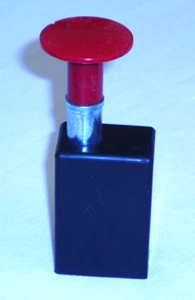
The red supercharger switch was mounted on
the front of the gear-stick in
Mad Max
(1979)
but on the rear side in the 1981
sequel which also featured a different gear-stick knob. |
|
| |
|
|
| |
Dashboard Police Light |
|
|
| |
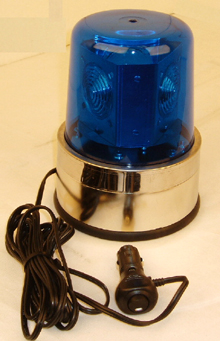
This is a genuine Peterson police light
powered via the cigarette lighter plug. |
|
| |
|
|
| |
 |
|
| |
|
|
|
| |
Police Radio
(non-functional) |
|
|
| |
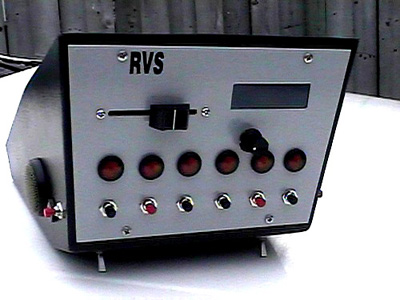
The roof mounted police radio box is a
non-functional prop created by the film's art department.
A single unit was built by the film's third assistant director Des
Sheridan who had help
from his father - Raymond Victor Sheridan. As a tribute, Des put his
father's initials (RVS)
on
the finished unit giving it some real-life authenticity. |
|
| |
|
|
|
| |
 |
|
| |
|
|
|
| |
Production Camera Switch |
|
|
| |
A small switch labelled "ON" was mounted
under the dashboard, near the bonnet toggle,
which actor Mel Gibson used to activate an exterior, car-mounted film
camera used for some
shots where the character was required to be seen driving the
Interceptor at speed. |
|
| |
|
|
|
| |
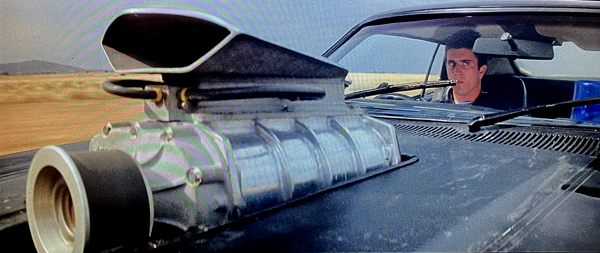
One of the car-mounted camera views
activated by a switch located under the right-side
dashboard.
Most shots were actually captured with a 35mm film camera fixed to
an extending crane
from the
back of a small utility truck driving either behind or in front of the
movie car. |
|
| aaaaaaaaaa |
|
|
aaaaaaaaaa |